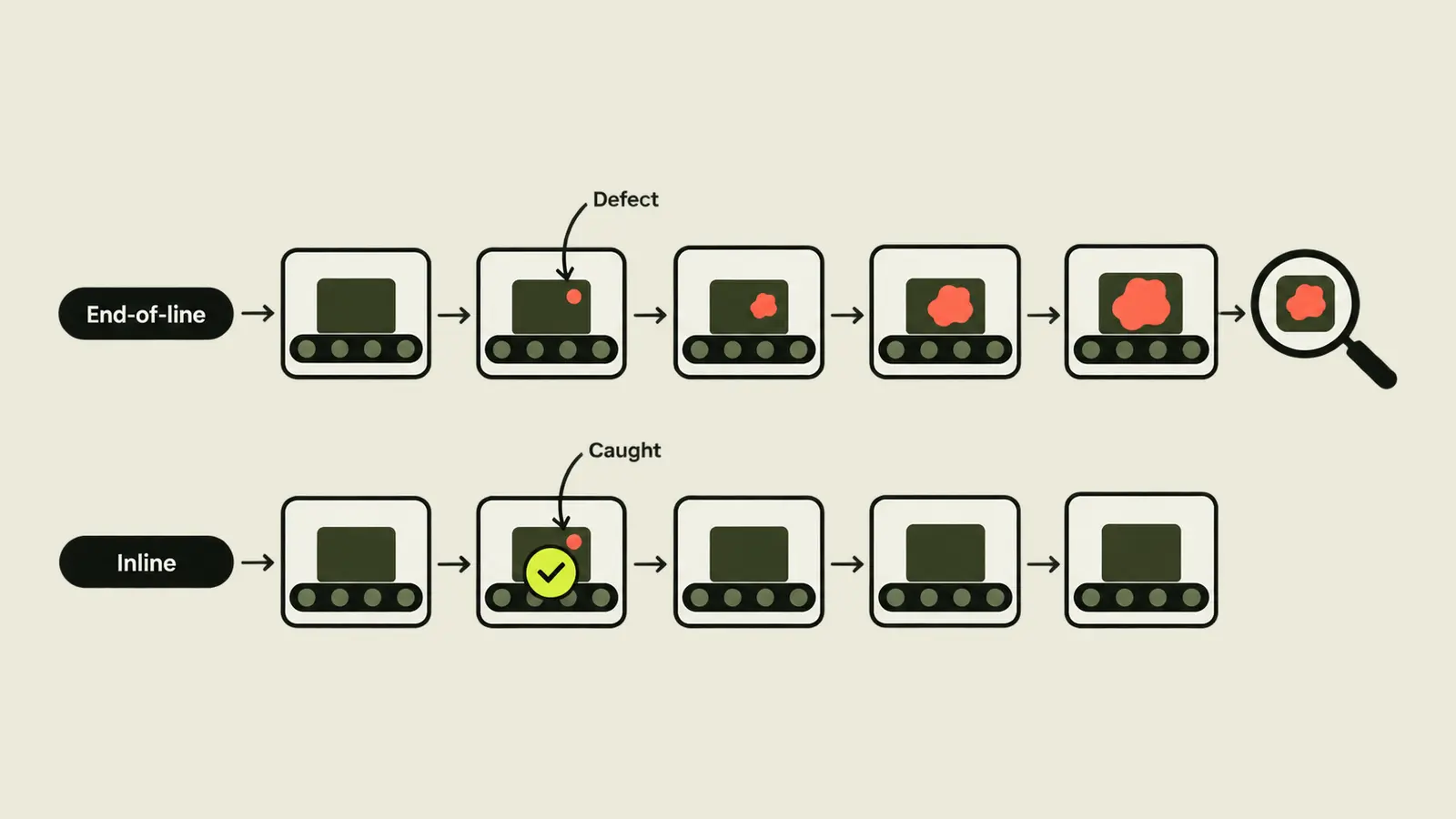
A defect that passes one station gets more expensive at every following one: rework at the next station, scrap at end-of-line, a warranty claim or recall in the field. The economics of quality are the economics of when you catch it. AI visual inspection exists to move that moment as close to the work as physically possible.
How it works
Computer-vision models compare what a camera sees against your standard (engineering drawings, acceptance criteria, golden samples) and make a pass/fail call on each check. Every check is logged with its image, the criteria it ran against, and the disposition, from first article to final QC. The inspection evidence exists the moment an auditor asks for it, because it was created as a side effect of the inspection itself.
Inline vs. end-of-line
End-of-line inspection has two structural problems: lag and sampling. Lag means a recurring defect runs for hours before anyone knows; sampling means some escapes are simply never looked at. Inline inspection inverts both: the work is checked as it is produced, at the station, and a detected non-conformance holds the part where it is, with the evidence attached, before rework compounds. Quality assurance becomes part of the process rather than an interruption to it.
Any camera is an inspector
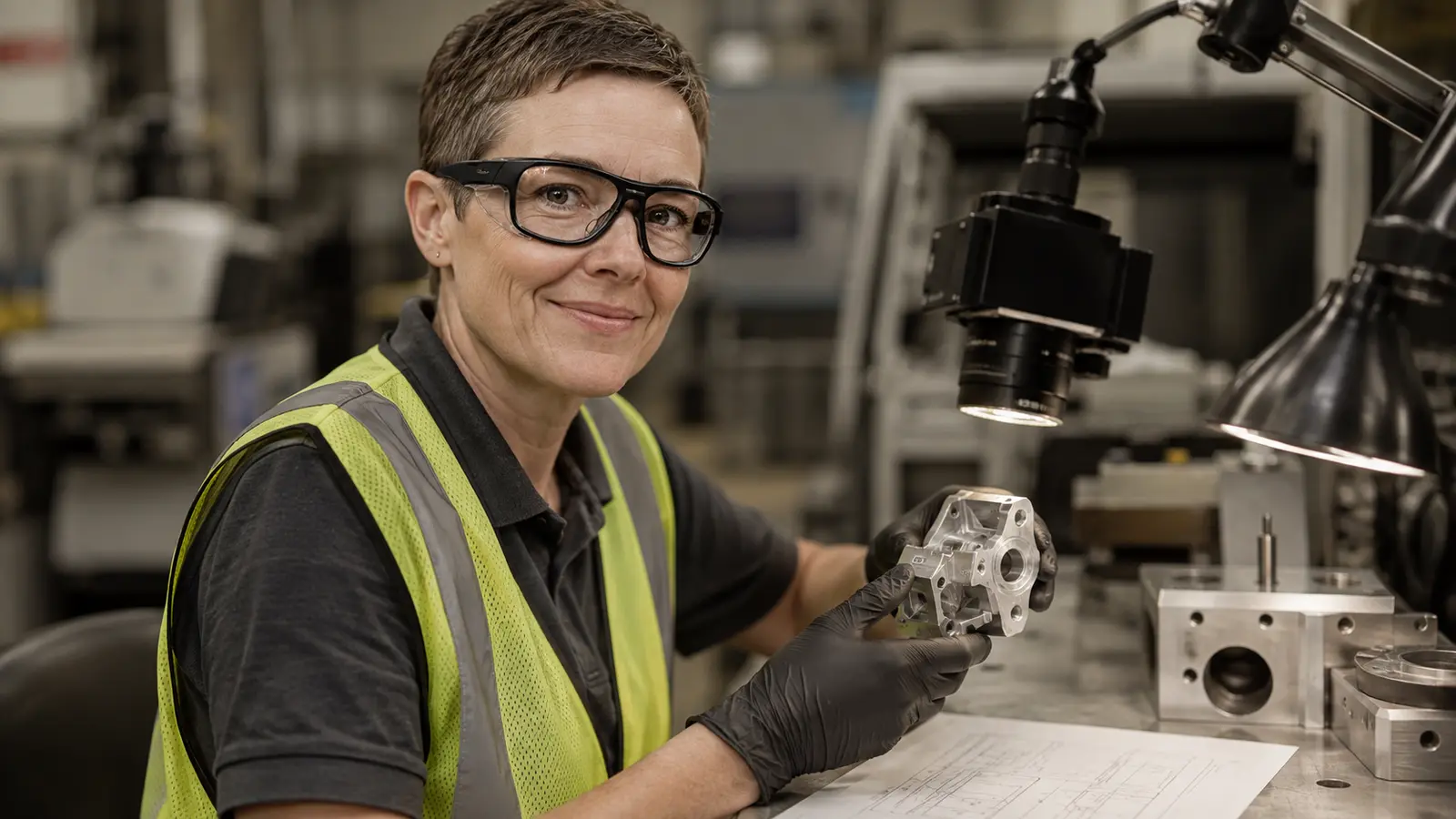
The older generation of machine vision assumed a dedicated inspection station: fixed lighting, fixed fixturing, one camera per check. Modern AI visual inspection runs on whatever sees the work: fixed cameras over a line, the tablet in an inspector’s hand, the glasses a welder is already wearing. That is the difference between inspecting some units at one station and inspecting every unit wherever it is worked on, with no station to queue for. This is the approach Visor Inspect takes.
What the record buys you
Because every check lands on the record, inspection stops being only a gate and becomes a data source: catch rates by station, recurring non-conformances, escape trends over time. Patterns like a torque check failing twice as often on one shift surface on their own, giving you the raw material for actually fixing root causes, which is where Visor Insights picks up.