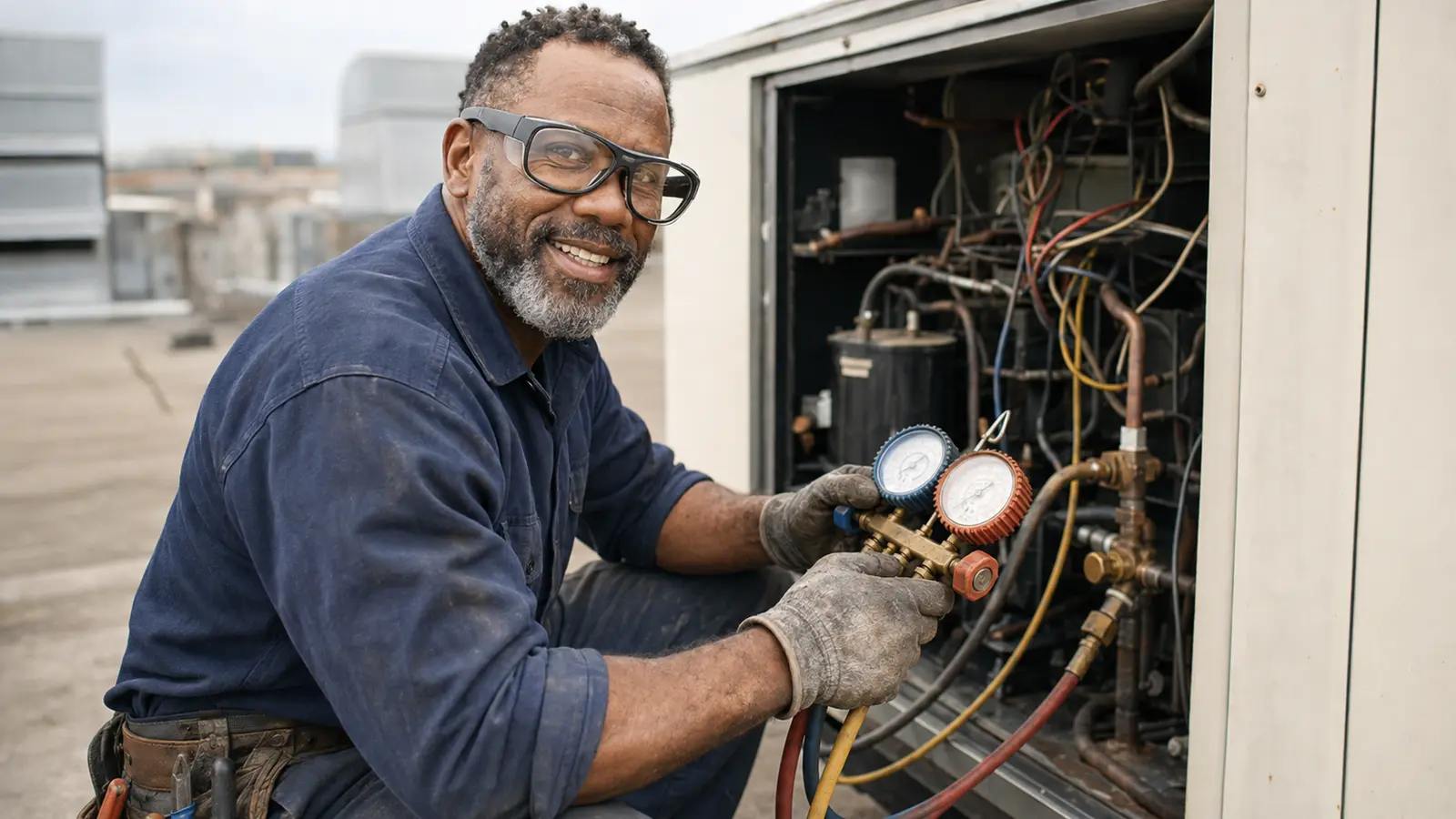
Most AI tools assume a keyboard, a screen, and a person’s full attention. Frontline work has none of those: hands are on tools, gloves are on hands, the environment is loud, and connectivity is a sometimes thing. Frontline AI is the category of systems designed for that reality: AI that meets the work where it happens instead of asking the worker to come to a desk.
What frontline AI actually does
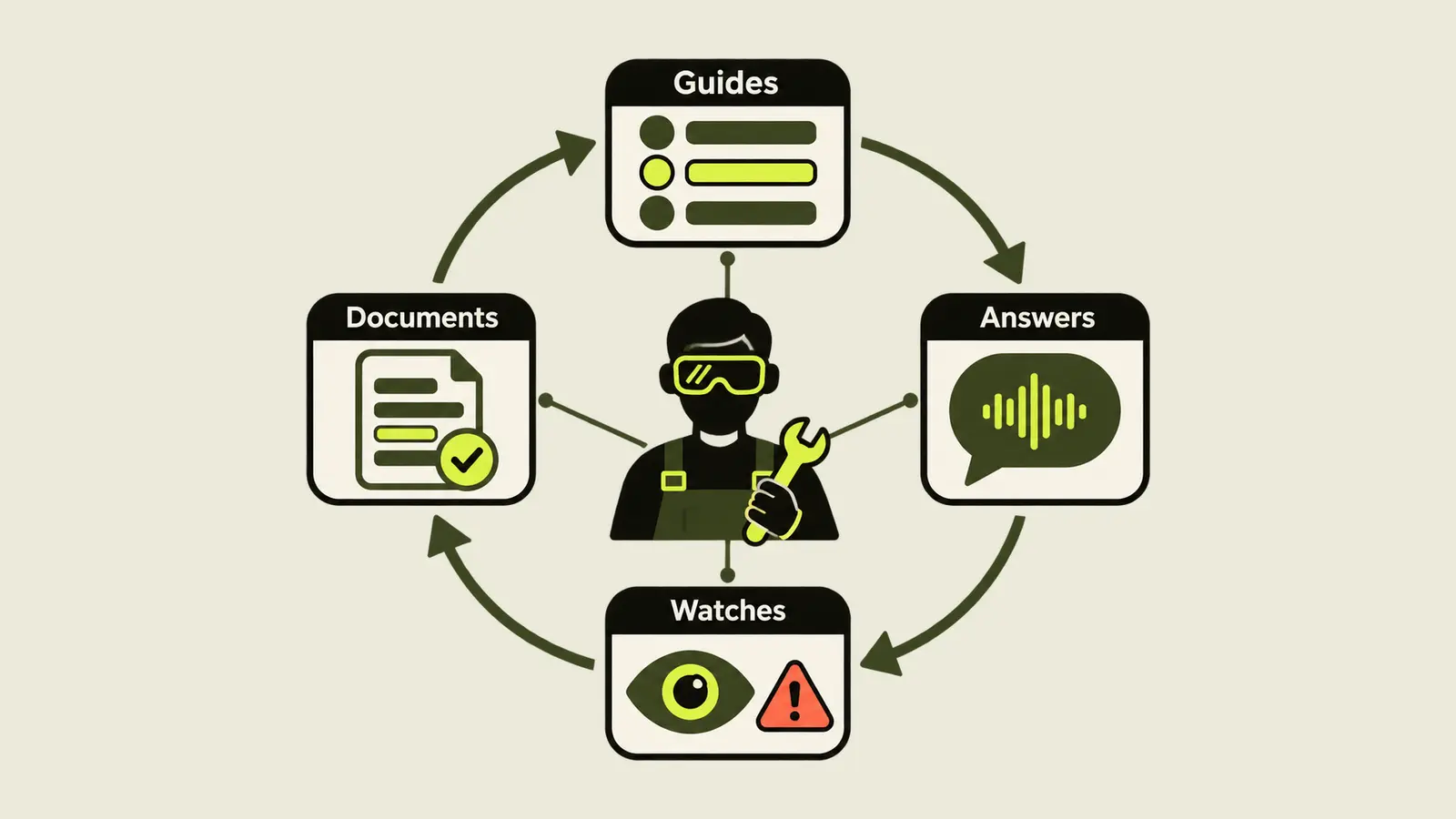
- Guides: step-by-step work instructions delivered at the point of work, with each step confirmed automatically as the system watches it being performed, so the procedure is followed rather than remembered.
- Answers: plain-language questions answered from the company’s own manuals, schematics, and repair history, by voice, hands-free, with every answer citing its source.
- Watches: computer vision for hazards, missing PPE, and product defects, flagged in real time rather than found in the post-incident review or at end-of-line.
- Documents: records, QC logs, and compliance evidence that write themselves as the work happens and post into the systems the operation already runs.
How it differs from a chatbot
A general-purpose assistant answers from the open internet, in text, to someone at a screen. Frontline AI has harder constraints: it must be grounded in the company’s own documentation, because a plausible-but-wrong answer about a torque spec is a different kind of failure than a bad restaurant recommendation. It must know which machine, variant, and fault history it is looking at. It must work by voice, because the worker’s hands are occupied. And it must run at the edge, because the remotest asset does not wait for a connection.
Why it is rising now
Three pressures converged. The most experienced technicians are retiring, and a departing expert takes decades of type-specific judgement out the door unless it is captured while still on the floor. Their replacements need to be productive in weeks, not years, which means the expertise has to travel in the tools, not just in the training. And the hardware finally caught up: industrial smart glasses are now safety-rated and comfortable enough for all-day wear, and multimodal AI models became capable of grounded reasoning about the physical world.
Frontline AI vs. connected worker platforms
Connected worker platforms spent the last decade digitising the frontline: paper forms became apps, binders became screens, training moved online. Frontline AI is the layer after that. The system stops being a passive display of instructions and starts seeing the work, answering about it, confirming it, and learning from it, so every job makes the next one better. Visor is built as exactly this layer: one platform where the guidance, the answers, the watching, and the records come from the same understanding of your operation.