A standard operating procedure is the written, approved way to perform a task: the steps, the checks, the acceptance criteria. Adherence is the behavioural half of that bargain: whether work-as-done matches work-as-written. Most operations are further apart on those two than they believe, and the gap is invisible right up until it surfaces as a quality escape, a safety incident, or an audit finding.

Adherence vs. compliance
The two words get used interchangeably, but they sit at different altitudes. Compliance is the state of meeting a standard (ISO 9001, a regulator’s requirements, a customer quality agreement), and it is assessed periodically, usually by audit. Adherence is what happens between audits: whether this technician, on this unit, followed this revision. Compliance is the outcome; adherence is the daily behaviour that produces it. An operation can hold the certificate and still have an adherence problem. It just cannot hold it for long.
Why adherence slips
Adherence rarely fails because people do not know the standard. Most misses are sequence failures, not knowledge failures: a step skipped under time pressure, a check remembered differently by two shifts, a new hire copying whoever is nearest. The written procedure is usually fine; the delivery of it is not.
- Stale documents: printed work instructions drift out of date the day they are laminated, and the newest revision lives on one supervisor’s laptop while the floor works from last quarter’s copy.
- Tribal shortcuts: the veteran’s faster way never gets written down, so it spreads by imitation instead of by revision.
- Invisible execution: nobody can see, at the moment it happens, whether a step was actually done, so the standard is enforced by trust and spot checks.
- End-of-line discovery: the miss is found at inspection or in the field, hours or weeks after the step where it happened.
How SOP adherence is measured
The traditional measures are all proxies, and all lagging: audit findings, first-pass yield, rework rates, incident investigations. They tell you adherence failed after it failed. The direct measure is a confirmation trail: step-level evidence of who performed what, when, and against which procedure revision. If you can answer those questions for any job at any moment, adherence is being measured. If you can only answer them at audit time, what you have is archaeology.
Building adherence into the work
The pattern that works is to stop treating adherence as an inspection problem and make it a property of how instructions are delivered. Keep one controlled, current version of every procedure, published to every device: the job Visor Capture does. Deliver it as digital work instructions at the point of work, one step at a time, with each step confirmed automatically from what the AI sees before the next unlocks, so nobody has to stop and record it: the job of Visor Guide. Let the record write itself as the work advances, so the confirmation trail exists without anyone filling in paperwork: the job of Visor Document.
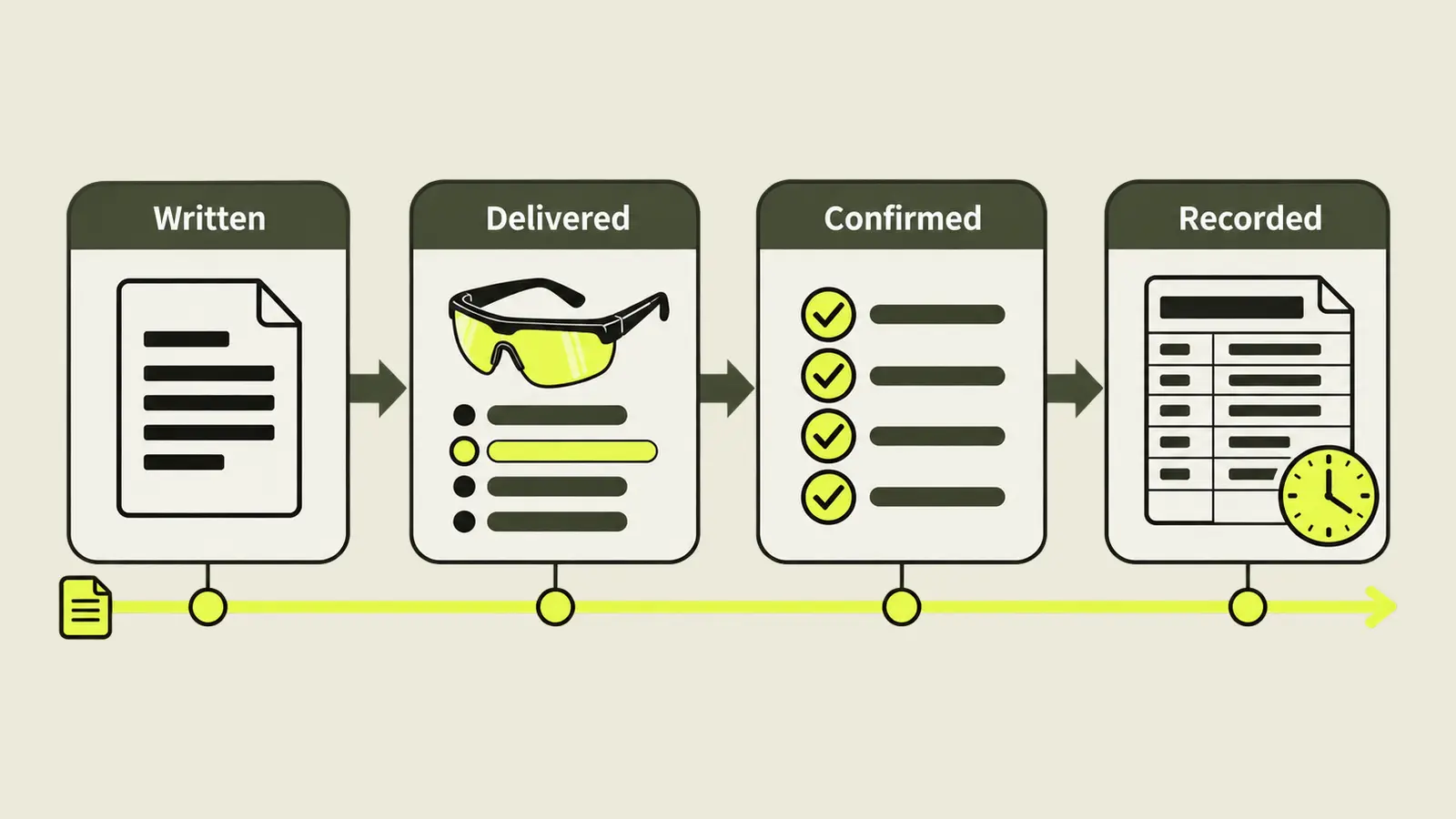
Delivered this way, on the device in the worker’s hand or the glasses on their face, hands-free and read aloud, adherence stops being policing and becomes flow. Errors are caught at the step where they happen instead of at end-of-line, and the procedure becomes the standard rather than a suggestion.